
Telangana is a land of rich history, ancient engineering, and strong water management traditions. Despite having a largely semi-arid climate, the state is home to thousands of lakes and tanks that have supported agriculture, drinking water needs, and ecosystems for centuries. These lakes in Telangana are not just water bodies—they are a lifeline for rural and urban communities.
Historical Importance of Lakes in Telangana
Most lakes in Telangana are man-made, built by rulers of the Kakatiya dynasty between the 12th and 14th centuries. The Kakatiyas developed a unique “chain of tanks” system, where excess water from one lake flowed into another. This system reduced floods, recharged groundwater, and ensured year-round water supply for villages.
Later, the Qutb Shahi rulers and Nizams of Hyderabad continued lake construction to support growing cities and agriculture.
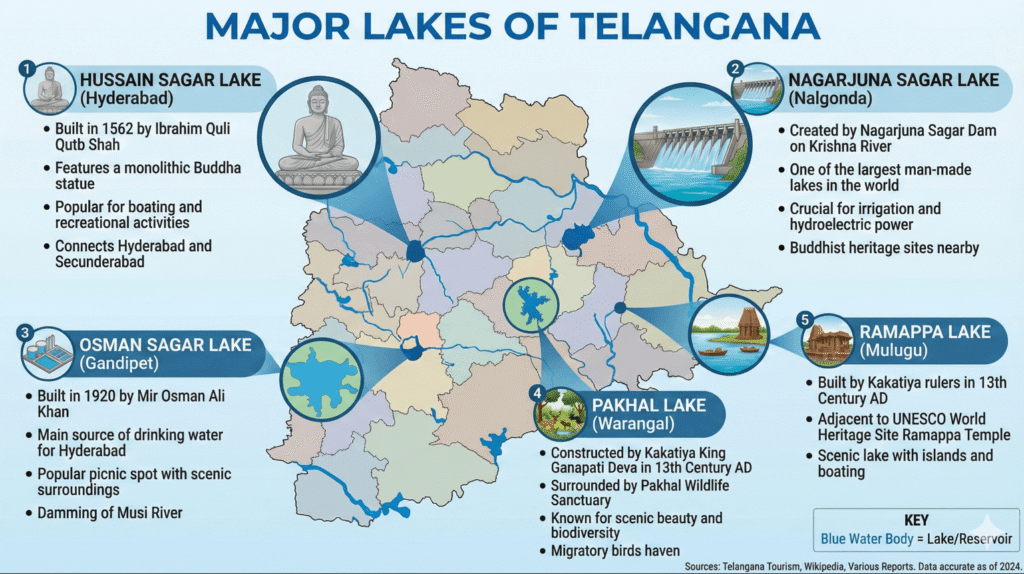
Famous Lakes in Telangana
Hussain Sagar Lake (Hyderabad)
Hussain Sagar is one of the most well-known lakes in Telangana. Built in 1563 by Ibrahim Quli Qutb Shah, it connects Hyderabad and Secunderabad. The lake is famous for the Buddha statue at its center and is a major tourist attraction, though it faces pollution challenges today.
Osman Sagar and Himayat Sagar
These two lakes were built after the devastating 1908 Musi floods to protect Hyderabad from flooding. They continue to play a vital role in drinking water supply and flood control.
Pakhal Lake (Warangal)
Pakhal Lake was constructed in the 13th century by King Ganapati Deva of the Kakatiya dynasty. Surrounded by forests, it is close to the Pakhal Wildlife Sanctuary and supports biodiversity as well as tourism.
Shamirpet Lake
Located north of Hyderabad, Shamirpet Lake was built during the Nizam period. It is popular for weekend trips, bird watching, and peaceful surroundings.
Laknavaram Lake (Mulugu District)
Laknavaram Lake is a scenic lake known for its hanging bridge and forest backdrop. It has become a popular eco-tourism destination in Telangana.
Lakes Outside Hyderabad Region
Apart from Hyderabad, many districts have historically important lakes:
- Singur Lake (Medak/Sangareddy)
- Wyra Lake (Khammam)
- Ramappa Lake (near Ramappa Temple, a UNESCO World Heritage site)
- Manjeera Reservoir (supports drinking water needs)
These lakes support irrigation, fisheries, and rural livelihoods.
Difference Between Lakes and Reservoirs
A lake is a naturally occurring or traditionally built water body, while a reservoir is usually created by building a dam across a river. In Telangana, most traditional water bodies are lakes or tanks, whereas modern projects like Singur and Manjeera are reservoirs.
Ecological Importance of Lakes in Telangana
Lakes play a crucial role in:
- Groundwater recharge
- Supporting agriculture
- Maintaining local climate
- Providing habitat for migratory birds
- Supporting fishing communities
Many lakes in Telangana attract birds during winter, making them important ecological zones.
Threats to Lakes Today
Rapid urbanization has put many lakes under pressure. Major threats include:
- Encroachment of lake beds
- Sewage and industrial pollution
- Reduction in catchment areas
- Climate change and irregular rainfall
Without proper protection, many lakes risk shrinking or disappearing.
Government Initiatives: Mission Kakatiya
The Telangana government launched Mission Kakatiya to restore thousands of minor irrigation tanks. The program focuses on:
- Desilting lakes
- Strengthening bunds
- Restoring traditional water flow channels
This initiative has improved groundwater levels and agricultural productivity in many regions.
Conclusion
Lakes in Telangana reflect the state’s deep understanding of water management and sustainability. From ancient Kakatiya tanks to modern reservoirs, these water bodies continue to support life, livelihoods, and ecosystems. Protecting and restoring lakes is essential for Telangana’s future water security and environmental balance.